
Enterprise GPU server
Dell PowerEdge or HP ProLiant, NVIDIA GPUs
The standard deployment. One rack server runs both tiers for a site; add nodes as cameras grow.
- Dual Xeon, ECC memory, NVMe
- NVIDIA data-centre GPUs
- Rack or tower
Agentic video intelligence, on your premises
EnlytiX reads every frame from the cameras you already own, describes what is happening in plain language, decides whether it matters, and acts: an alert to the right person, an answer to a question, a report on the desk by morning. No footage leaves your site.
of recorded footage is never reviewed. Incidents are found after the fact, if at all, by someone scrubbing a timeline.
per thing you want to catch, in classic video analytics. Every new hazard means a new model, new training data and a new project.
video AI means streaming your floor, your workers and your faces off site. Most factories and regulators will not accept that.
EnlytiX sits on top of a perception layer that already runs on your cameras. Tier 1 sees; Tier 2 understands.
Fast perception running next to your cameras and recorders.
A reasoning layer that reads each event the way an experienced supervisor would.
Every camera and recorder feeds in: video, snapshots, and sensor events such as motion, audio exceptions and tampering. Existing cameras, existing recorders.
Each event is read in context: which camera, which area, what that area is watched for, what time it is. The system writes one honest sentence about the scene and decides if it is Normal, Monitor, Alert or Critical.
Alerts go to the right people on the dashboard, mobile app and email, or to on-site sirens and strobes. Everything is indexed so it can be searched, asked about and reported on.
Each item opens the section where you can try it.
This is what an operator sees. Events arrive from the cameras, are read within seconds, and are filed by severity. Only what clears your threshold interrupts anyone.
Every event is counted, classified or not, so these totals match each source’s own view. Line crossings, crowding, anomalies and recorder events sit on one timeline.
How far the reading and search index has caught up with the cameras.
Classic video analytics needs a trained model for every hazard. EnlytiX reads each frame as a scene and checks it against incidents written in plain language. Adding one is typing a sentence. It can also answer “nothing is wrong”, which is what keeps false alarms down.
Write what you want watched for, the way you would brief a guard. Pick the kind of camera it applies to and how serious it is.
No retraining. No new model. No downtime.
Write an incident on the left and activate it. You will see how it is added to that camera type and which frames in the sample library it would have caught.
A gate camera should not be asked whether an aisle is blocked. Cameras are grouped by type, and each type has its own incident list and its own yes/no checks. Universal hazards such as fire and a person down are watched everywhere.
The agent answers from your own incident records, counts and footage. It shows its working, cites the frames it used, and says so when it cannot check something. Type, or speak in English, বাংলা, or a mix.
Hello. I can see every camera on site and every incident on record. Pick a question on the right or ask your own.
Every event is indexed by what it looks like and what it means. Describe a scene or a person, or start from a photo, and get ranked matches across every camera in seconds, however large the archive grows.
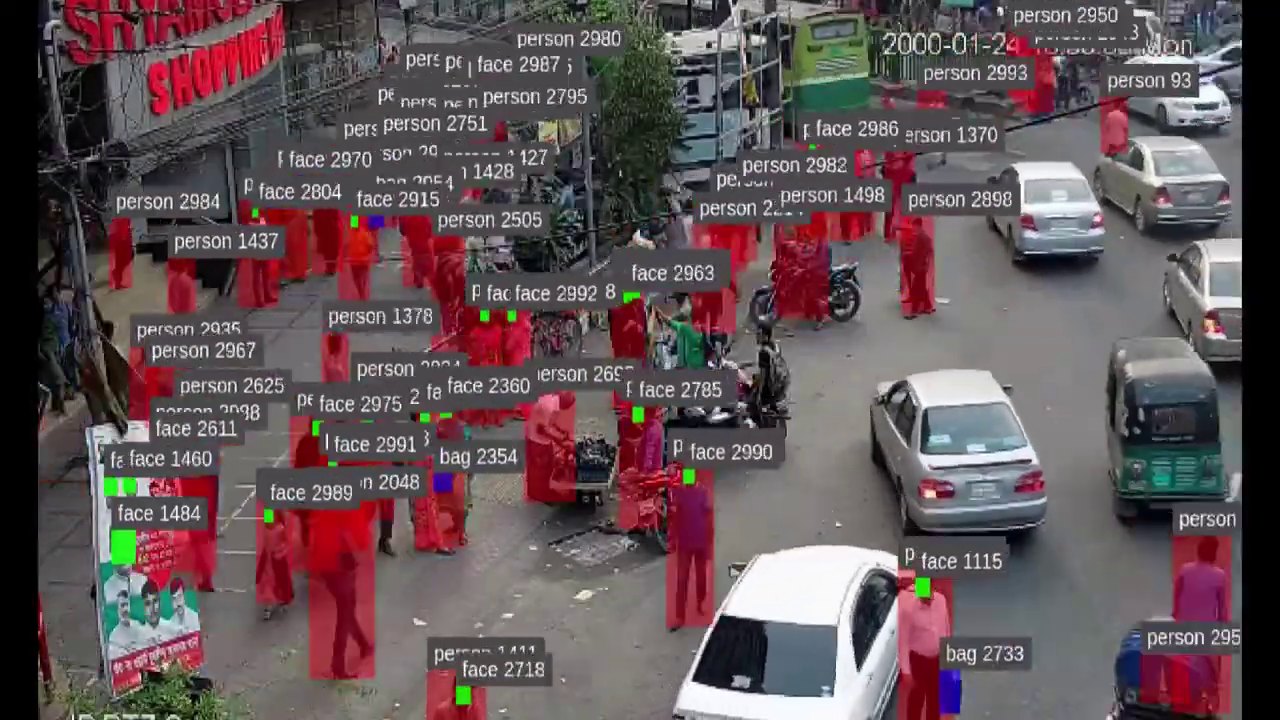
Know who is on site, spot who should not be, and follow a person across cameras, with privacy controls that decide who sees faces at all.
Each capture is matched against enrolled photos. Matches arrive as side-by-side cards; low-confidence matches are marked for review instead of being trusted.
Faces that match no one are clustered, so one stranger seen nine times is one visitor, not nine alerts.
Select a camera to see when the same person passed it.
No face needed. Describe clothing and colours.
PPE, unattended objects, workstation activity, temperatures and standing safety checks. All from the same cameras, all with evidence attached.
Share of people seen wearing each item, today. Items are described in plain words, so a new item is one more word.
Every person in the frame is checked. Select an item to focus on who is missing it.
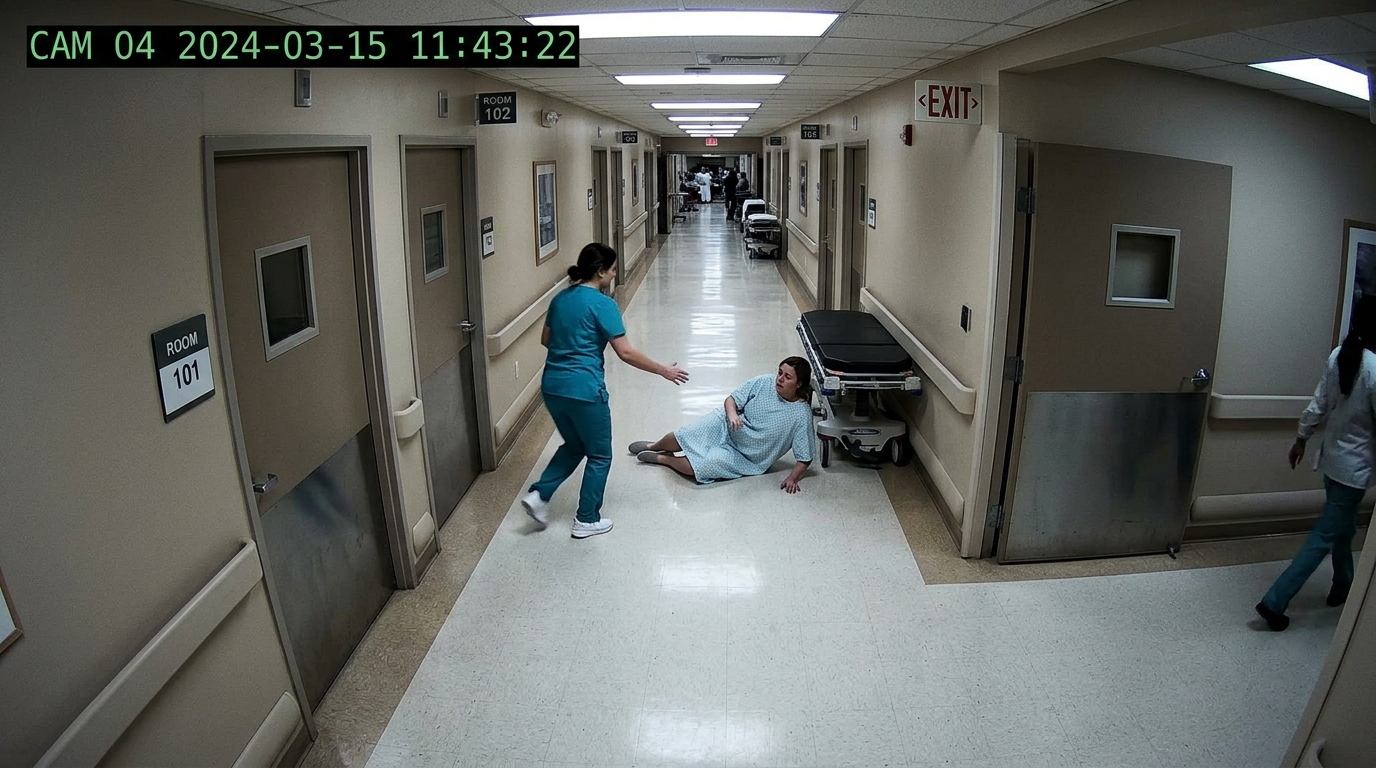
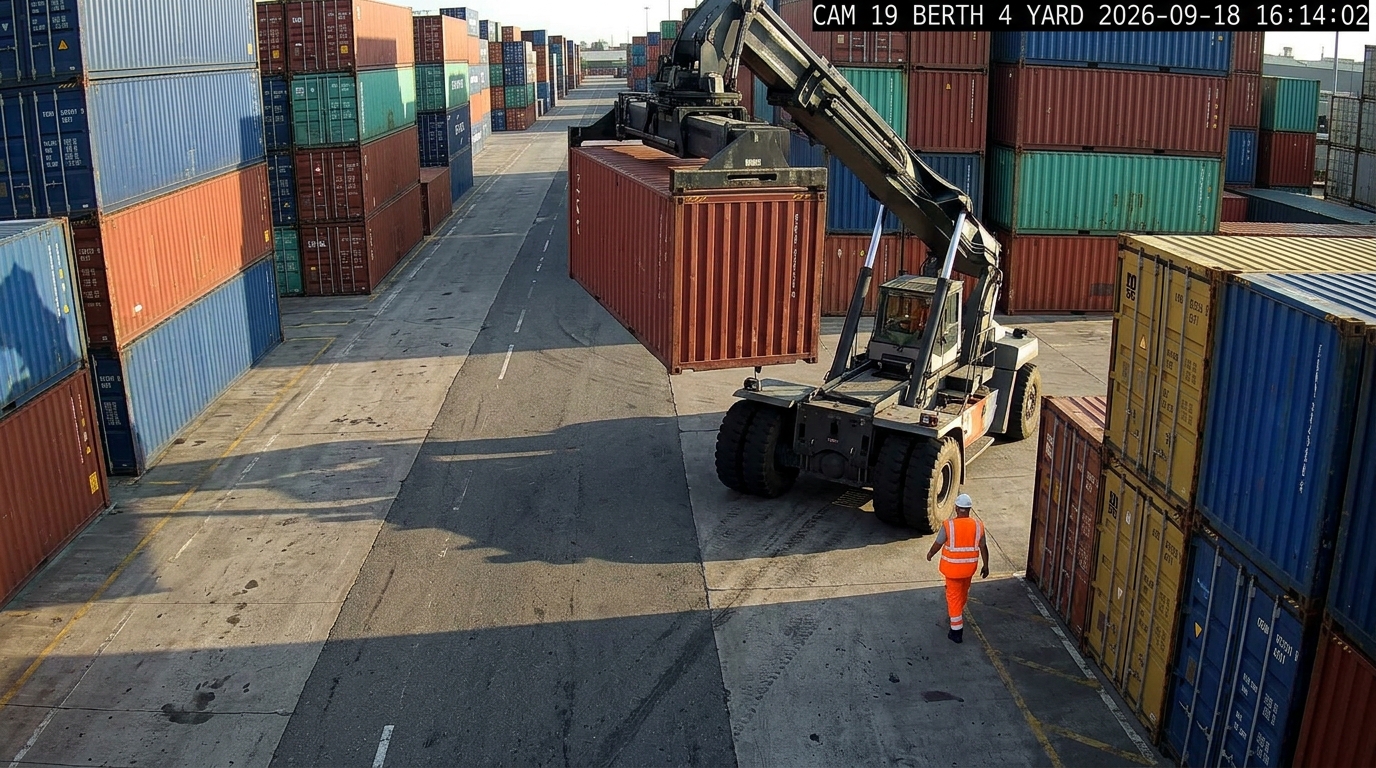
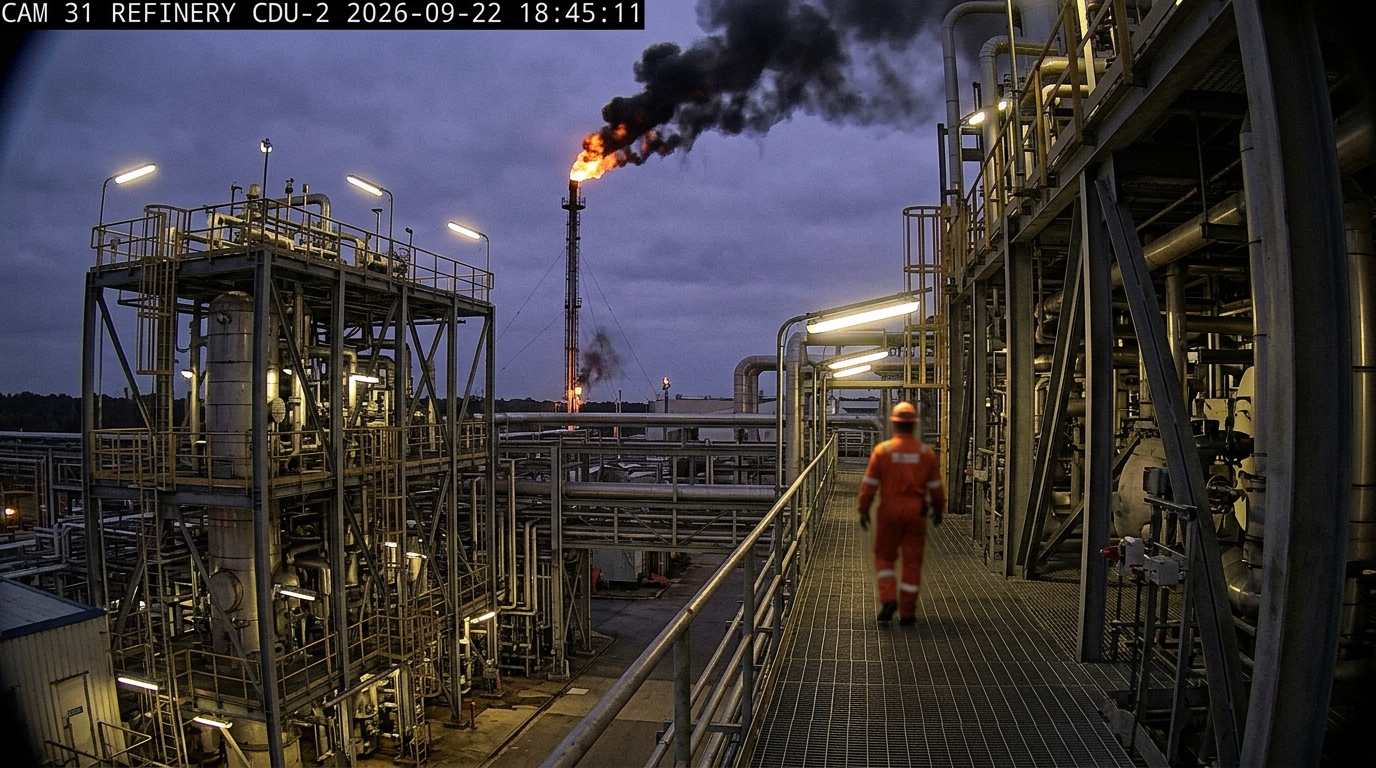
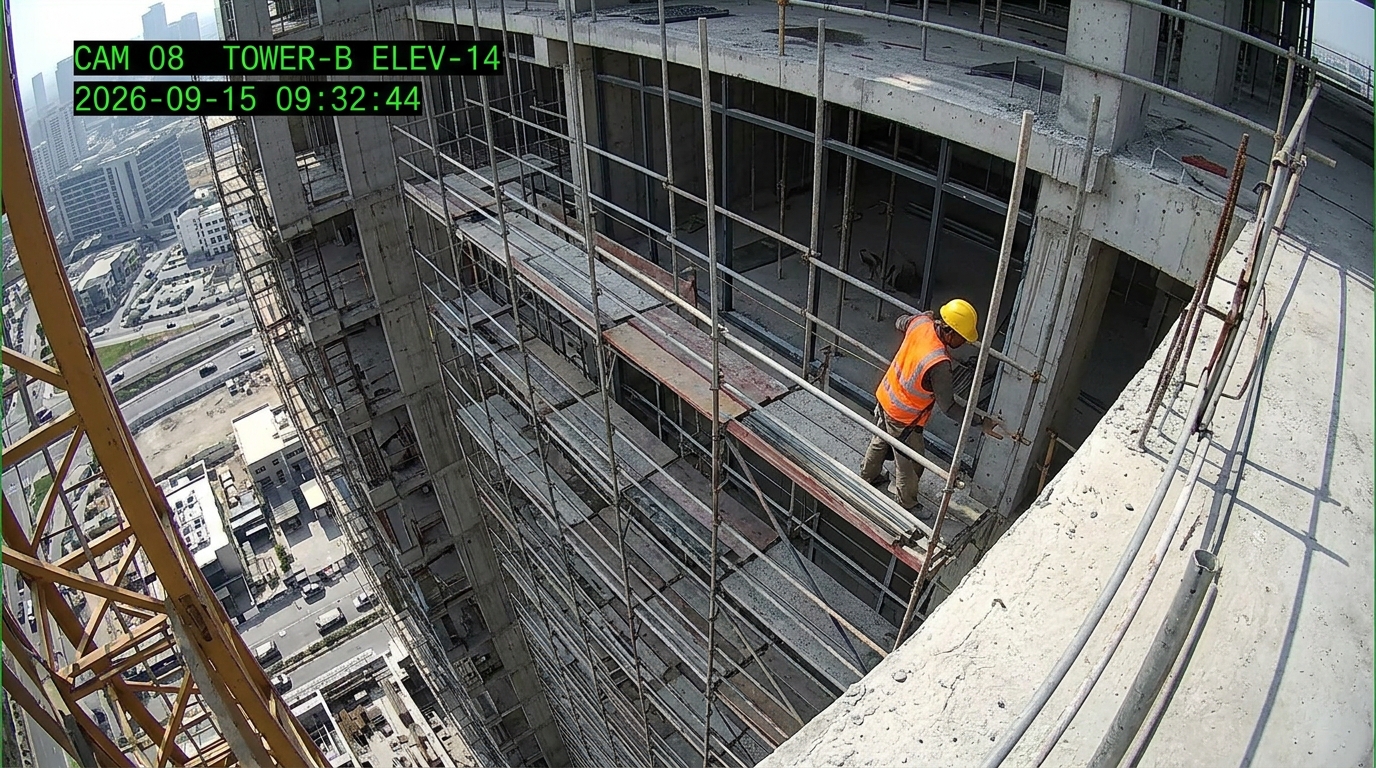
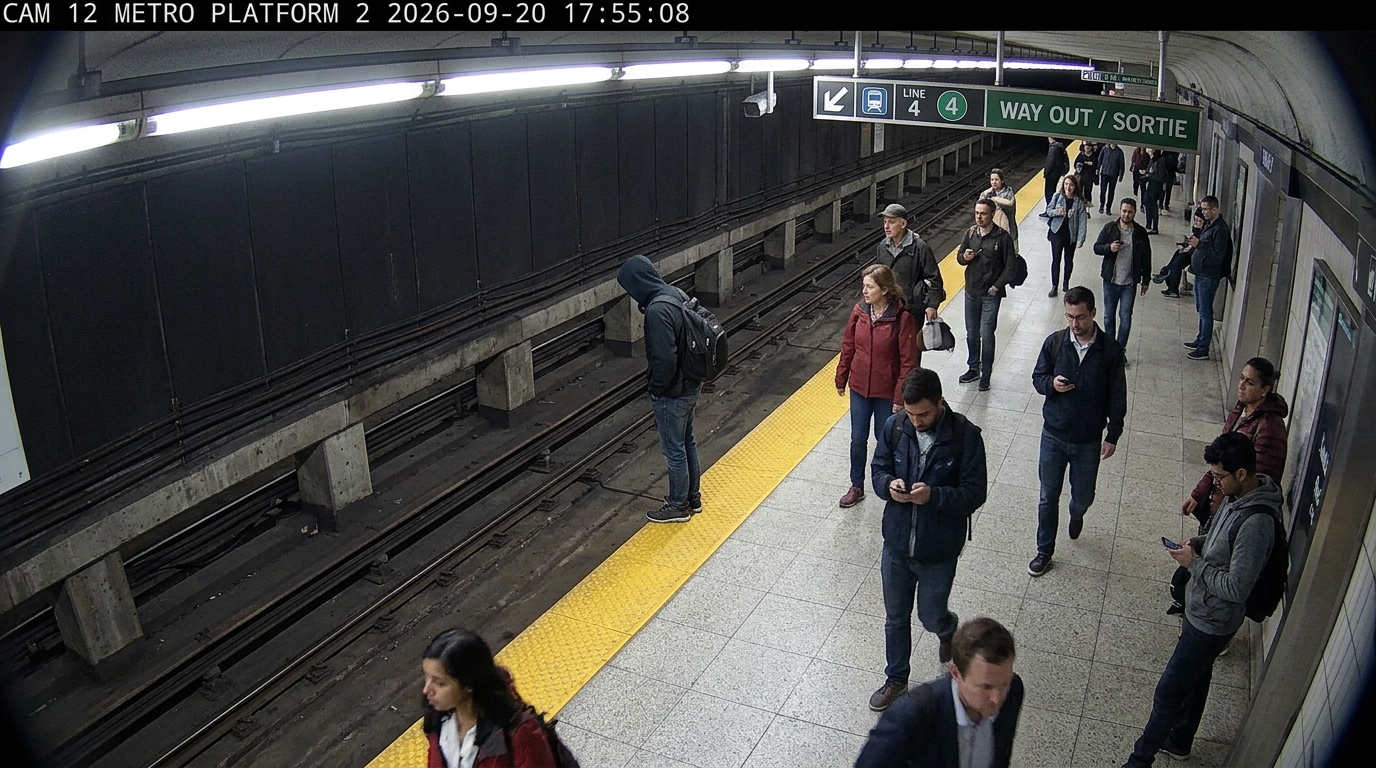
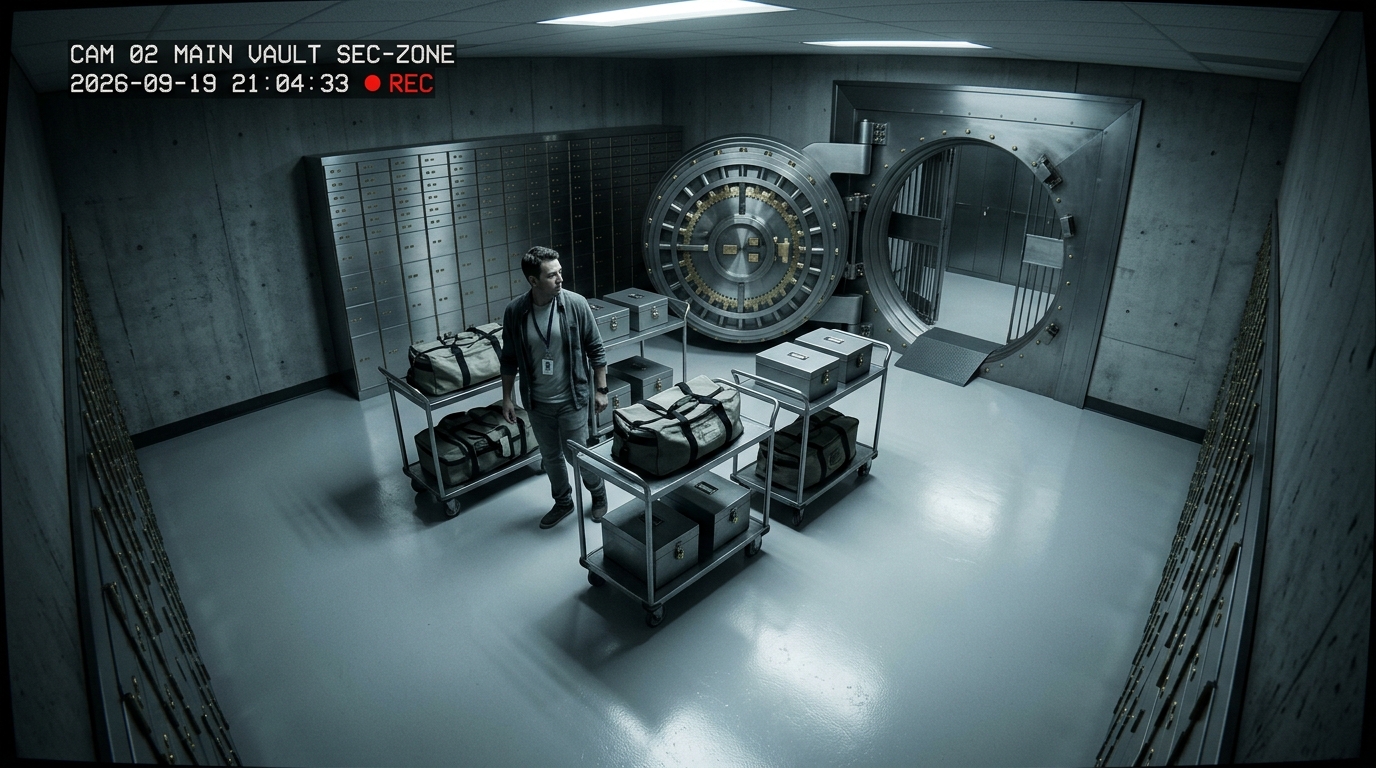
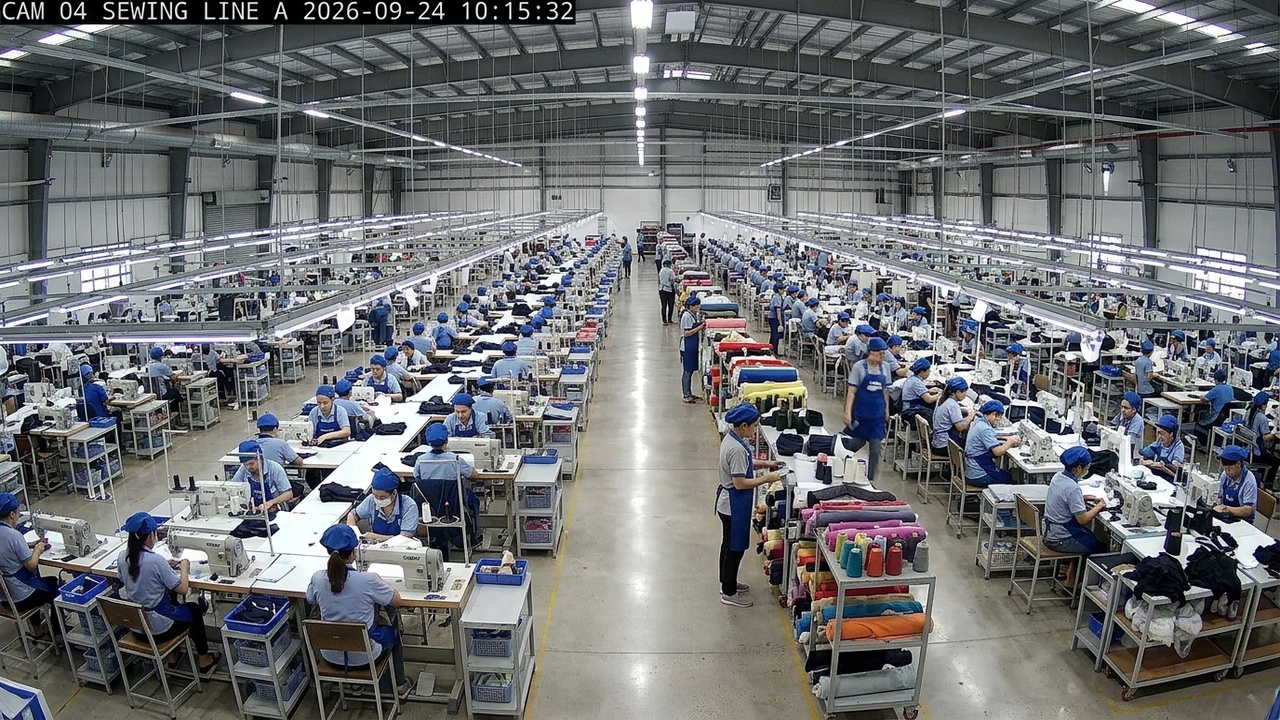
Illustrative sample frames, not from a customer site.
A pallet that does not move makes no motion, so motion alarms never see it. EnlytiX checks marked areas on a timer and tracks how long each object has been left.
Aisles, fire lanes and secure bays must stay clear. You draw the region, name what to watch for in plain words (“a cart”, “a pallet”, “a person”), and set the rule: alert if an object sits unattended longer than 30 minutes. The clock pauses while someone is working with it and restarts when they leave.
Each watch reports samples per hour, errors, and how long tracks live. “No alerts” is never ambiguous between “nothing was left” and “the camera could not see”.
Activity index per station in 30-minute slots: 0 is the station’s own quiet level, 100 its normal working level. Shift start, break and end show up without any shift calendar.
Maximum temperature per thermal camera, last 24 hours, with the alert line.
Yes/no questions asked on every relevant frame. A check that never fires is reported too, because silence is not proof the floor was clear.
Cartons on a pallet, garment bundles on a table, fabric rolls on a rack: EnlytiX counts them from an ordinary camera frame, groups them into stacks, and reports how high each stack is. Pick the object type or click one example in the frame, and it finds the rest. No barcode, no scale, no training.
Who and what came in, how crowded it got, what the recorders heard, and whether every camera is actually working.
Lines count crossings by direction; zones measure occupancy. Drawings scale with resolution, so they survive a camera upgrade.
Bangla and English plates, vehicle type, and whether the plate is on the approved list.
Events from recorders and camera sensors are read the same way as video events.
A camera that has stopped sending is a blind spot. Uptime, last frame and clock drift for every device.
The written work an operations team does every day, done for them: shift handovers, management briefs and buyer-audit evidence, in English or বাংলা, as Word or PDF.
Route by severity and incident type. Each person sets their own threshold.
Every incident links a camera, an area, a type, a time and the things named in its description. The graph connects them so you can ask questions that span cameras: what fires together, what makes an area different, which checks have never fired.
Select a node to see what it connects to.
The same platform, configured in plain language for each kind of site.
EnlytiX needs no custom training. It reads each scene on its own and adapts to the place: a home, an estate, a factory, a warehouse, a campus, a street. What you want watched is written in a sentence, not trained into a model, so a new site or a new risk is minutes of work.
Every event is read before anyone is interrupted, and the system can say “nothing is wrong”. Operators see the few that matter.
Ask a question or describe a scene instead of scrubbing hours of recordings across many cameras.
A new hazard or a new kind of site is a sentence, not a project. No training data, no model update, no downtime.
Audit packs, handovers and briefs with dated frames, ready when the buyer or inspector asks.
On-premise and able to run fully air-gapped. Video and faces never leave your network.
Works with the cameras and recorders you have. No rip-and-replace.
A server room appliance, your existing cameras, and a rollout measured in weeks.
Dell PowerEdge or HP ProLiant, NVIDIA GPUs
The standard deployment. One rack server runs both tiers for a site; add nodes as cameras grow.
Huawei servers with AI accelerator cards
For organisations standardised on Huawei infrastructure or with sourcing requirements.
Compact GPU appliance
For remote gates, small warehouses and sites with weak links. Reports up to a central EnlytiX.
One command centre, many plants
Each site keeps its video locally. Only events and descriptions travel, which cuts bandwidth by over 95%.
Indicative only. Final sizing follows a site survey: resolution, frame rate and which features run on which cameras.
Site survey, appliance installed, cameras and recorders connected and grouped.
Incident types and checks written per camera type, with your EHS and security leads.
Alerts reviewed daily; thresholds and wording tuned on your own footage.
More cameras, more sites, more teams. No re-engineering.
A pilot runs on a handful of your cameras, on your premises, for four weeks.
Selected slides from the EnlytiX briefing. Select a slide to enlarge it; use the arrow keys to move through them.